
Condition
How to treat melasma
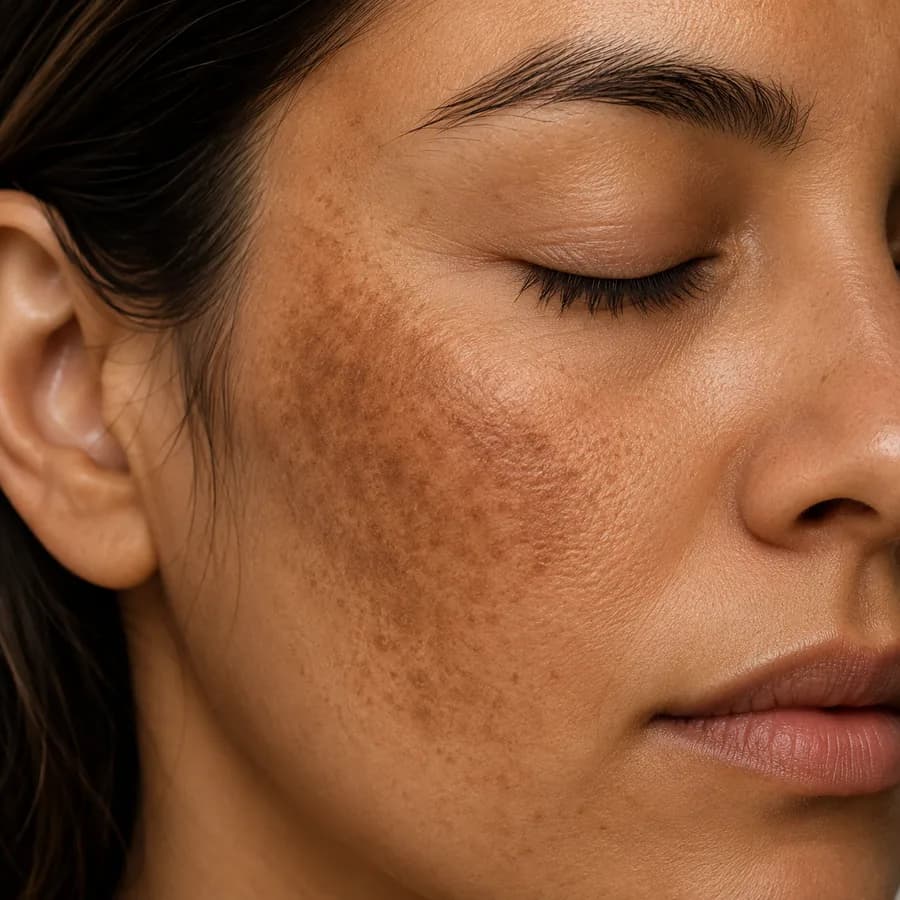
Brownish, usually symmetrical patches that appear on the face — mainly the cheeks, forehead and upper lip — associated with hormones and sun exposure.
About melasma
Melasma is a hyperpigmentation caused by excessive melanin production in specific areas of the skin, resulting in brownish patches that tend to be symmetrical on both sides of the face. It is one of the most common concerns in an aesthetic dermatology clinic, especially in women.
It is known for being a resistant, recurring condition: the melanocytes (melanin-producing cells) in these areas become hyperactive, and any new stimulus — such as unprotected sun exposure — can reactivate pigment production, even after a successful treatment.
Recommended treatments
The SKIMS Method protocol for melasma
The exact indication depends on age, severity and history — an in-person evaluation defines which protocol (or combination) is right for your case.

Skims Melani
Exclusive treatment for melasma
See full protocol →Real results
Before and after — melasma
- Skims Melani
Performed by Dr. José Henrique Effgen
Results vary depending on the case, individual response and adherence to follow-up care. Images are of real patients, published with authorization.
Frequently asked questions
Does melasma have a definitive cure?
The right protocol visibly improves the spots, but "definitive" in practice means ongoing control — maintaining the result depends on continuous follow-up and daily sun protection, since the condition tends to relapse without this care.
Why does melasma come back even after treatment?
The melanocytes in the affected area become hyperactive and sensitive to new stimuli, especially sun — that's why strict sun protection is part of the treatment, not just an extra precaution.
Ask your questions about melasma
The recommended protocol depends on an in-person evaluation at SKIMS House clinic, in São Paulo.
Chat on WhatsApp